
20 Other Ways to Say “Mark Your Calendars” (With Examples)

20 Other Ways to Say "Mark Your Calendars" (With Examples)

“Mark your calendars” is a handy phrase, but it shows up in nearly every invitation, newsletter, and event email. After a while, readers skim past it. The right alternative can make your message sound fresher, warmer, or more formal, depending on what you need. This guide covers 20 other ways to say “mark your calendars,” … Read more

20 Other Ways to Say “Happy to Announce” (With Examples)

20 Other Ways to Say "Happy to Announce"

“Happy to announce” is one of the most familiar openers in professional writing, especially on LinkedIn. It works, but it also shows up so often that it can blend into the background instead of grabbing attention. Whether you’re sharing a promotion, a launch, or good news with your team, a fresh phrase can make your … Read more

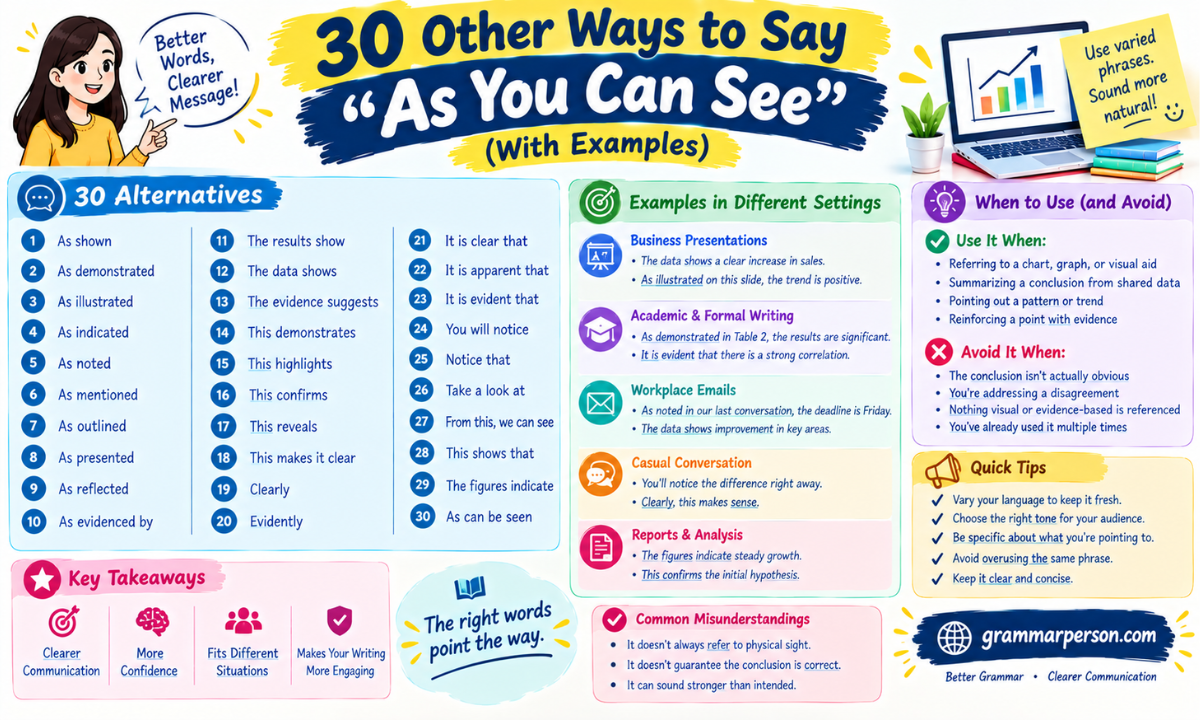
30 Other Ways to Say “As You Can See” (With Examples)

30 Other Ways to Say "As You Can See"

“As you can see” is a handy phrase for pointing readers or listeners toward evidence, data, or a conclusion. But it shows up so often in presentations, reports, and emails that it can start to sound like filler. Whether you’re writing an academic paper, a business report, or a casual message, having alternatives ready keeps … Read more

30 Professional Ways to Say “Good Luck in Your Future Endeavors” (With Examples)

Professional ways to say β€œGood Luck in Your Future” with 25 polite and supportive alternatives.

“Good luck in your future endeavors” is one of the most common farewell phrases in the workplace, but it’s also one of the most overused. When a coworker resigns, a colleague retires, or a friend graduates, this phrase can feel more like a formality than a genuine wish. A warmer, more specific alternative β€” like … Read more

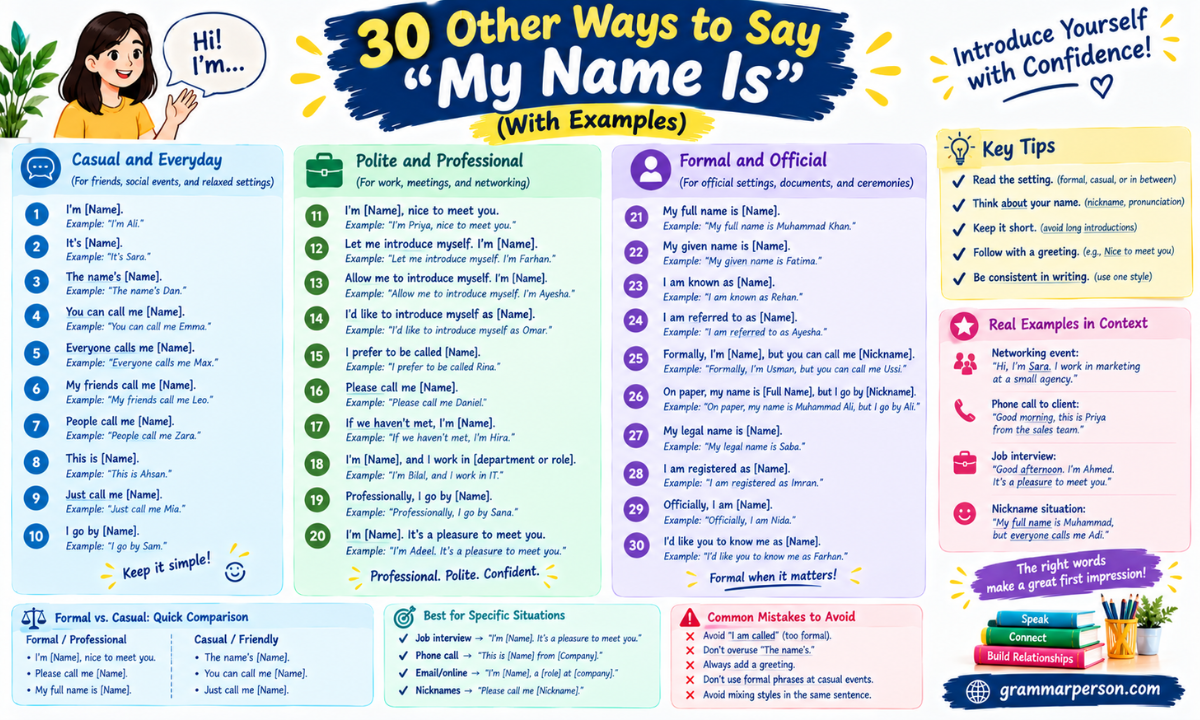
30 Other Ways to Say “My Name Is”

30 Other Ways to Say "My Name Is"

“My name is…” is the first thing most of us learn to say in English. It’s clear and correct, but it can sound stiff or robotic once you’re past the classroom. Native speakers rarely use it in casual chats, and it can feel too plain in a networking event or job interview. This guide covers … Read more

25 Other Ways to Say “Firstly, Secondly, Thirdly” (With Examples)

25 Other Ways to Say Firstly, Secondly, Thirdly (With Examples)

Listing points using “firstly, secondly, thirdly” is grammatically correct, but it can sound stiff or repetitive β€” especially in essays, emails, presentations, or everyday conversation. You can use smoother transition words like “to begin with,” “in addition,” and “furthermore” instead, and they often read more naturally to modern audiences. This guide breaks down what “firstly, … Read more