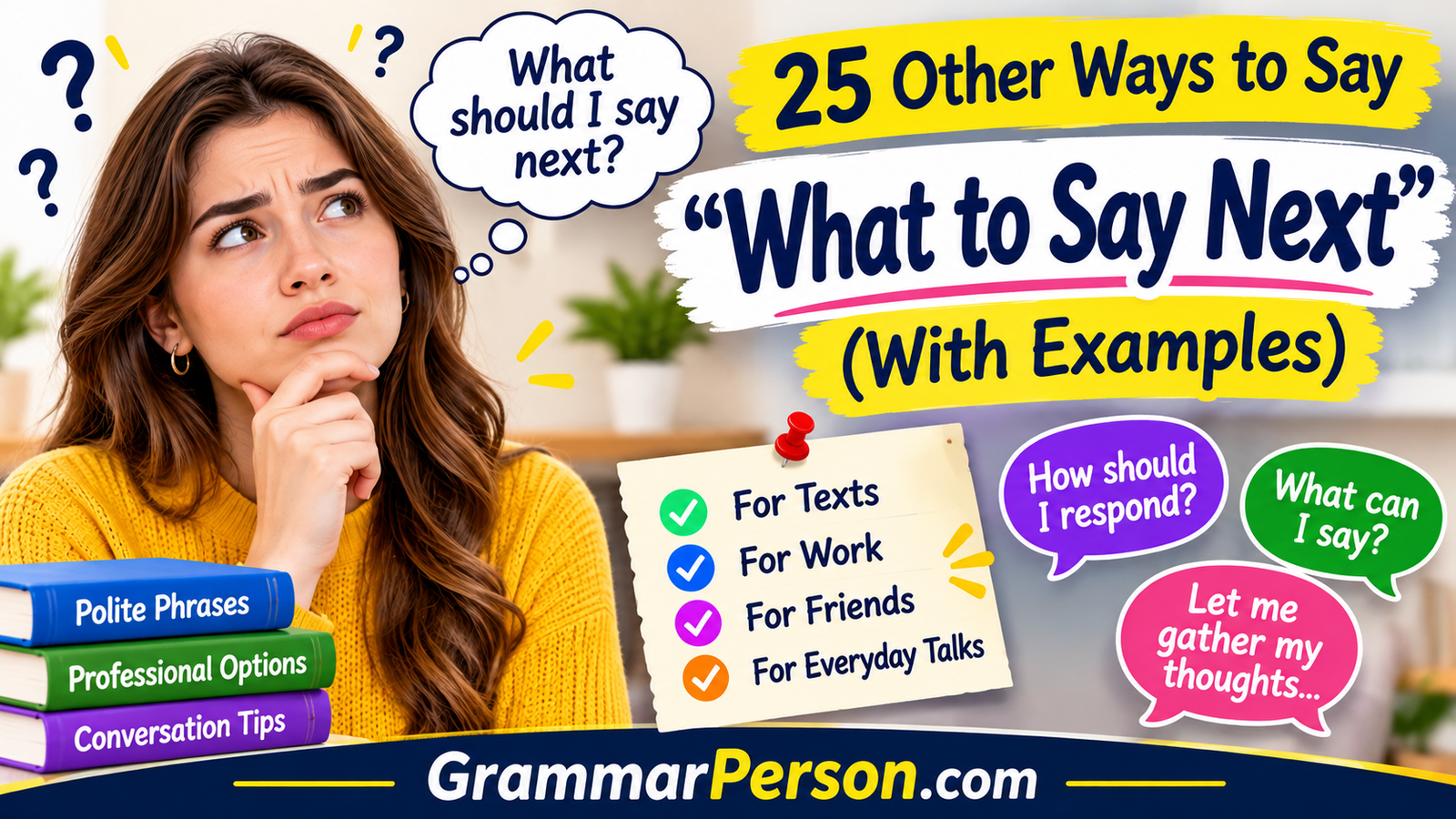
We all freeze in a conversation sometimes. You know you should reply, but the right words will not come. “What should I say next?” is the thought that pops up, and it can sound repetitive if you say it out loud every time.
The good news is that you have many better ways to express it. This guide shares 25 alternatives with examples. You will also learn which ones suit texts, work chats, and everyday talks.
What Does “What to Say Next” Mean?
“What to say next” describes the moment when you are unsure how to continue or reply. It shows up when the topic is tricky, the pause is awkward, or the message needs care.
The phrase is clear and easy to understand. But it can sound vague or stuck in professional settings, where a more polished phrase usually works better.
When Should You Use It?
You will often need this phrase when:
- You are replying to a sensitive text or email
- A conversation hits an awkward pause
- You need to give feedback and want the right wording
- You are answering a tough question at work
- You are speaking in a second language
Why Use Alternatives?
Switching your wording has real benefits:
- Sounds more confident. A polished phrase makes you seem calm and prepared.
- Fits the setting. A friend and a manager need different language.
- Buys you time. Some phrases give you a moment to think.
- Improves conversation flow. The right line keeps the talk moving.
Direct Alternatives
These are simple and work in most situations.
1. What Should I Say Next?
The clearest and most common version.
Example: “I read her message twice. What should I say next?”
2. What Can I Say?
Short and natural in casual talks.
Example: “He seems upset. What can I say?”
3. How Should I Respond?
Works well in both texts and emails.
Example: “How should I respond to this complaint?”
4. What Should I Say in Response?
Slightly more formal.
Example: “What should I say in response to the invitation?”
5. How Do I Reply?
Quick and easy for chats.
Example: “How do I reply to this without sounding rude?”
6. What’s an Appropriate Response?
Good when tone matters.
Example: “What’s an appropriate response to such a kind offer?”
Searching-for-Words Alternatives
Use these when you want the right wording, not just any reply.
7. I’m Searching for the Right Words
Honest and relatable.
Example: “I’m searching for the right words to thank you.”
8. How Can I Put This?
Great when the topic is delicate.
Example: “How can I put this kindly?”
9. I’m Not Sure How to Phrase It
Shows you care about clarity.
Example: “I’m not sure how to phrase it, but I appreciate your help.”
10. What’s the Best Way to Put It?
Friendly and thoughtful.
Example: “What’s the best way to put it without hurting her feelings?”
11. How Should I Word This?
Perfect for writing emails and messages.
Example: “How should I word this request to my manager?”
12. What Words Should I Use?
Simple and helpful for learners.
Example: “What words should I use to explain the delay?”
Polite and Professional Alternatives
These work in meetings, emails, and customer chats.
13. How Do I Say This Politely?
Shows respect and care.
Example: “How do I say this politely to a client?”
14. I Want to Say This Carefully
Signals that you are choosing your words with thought.
Example: “I want to say this carefully, so please bear with me.”
15. I’m Thinking About the Best Response
Professional and calm.
Example: “I’m thinking about the best response and will reply by noon.”
16. I Need Time to Think About What to Say
Honest and mature.
Example: “I need time to think about what to say. Can we talk tomorrow?”
17. Let Me Gather My Thoughts
Smooth way to pause in a meeting.
Example: “Let me gather my thoughts before I answer.”
18. How Should We Proceed?
Moves a work conversation forward.
Example: “How should we proceed with the project timeline?”
Conversation-Flow Alternatives
Use these to keep a chat going.
19. How Do I Continue This Conversation?
Helpful for texting or first dates.
Example: “How do I continue this conversation without it feeling forced?”
20. What Comes Next in This Conversation?
Light and curious.
Example: “What comes next in this conversation? I have no idea!”
21. How Do I Keep the Conversation Going?
Popular for networking and small talk.
Example: “How do I keep the conversation going at this event?”
22. What Can I Say to Continue the Conversation?
A fuller version for awkward silences.
Example: “What can I say to continue the conversation after that pause?”
Honest and Personal Alternatives
These show you are genuinely stuck or processing.
23. I Don’t Know How to Say It
Simple and sincere.
Example: “I don’t know how to say it, but I’m sorry.”
24. I’m Trying to Process This
Perfect after surprising news.
Example: “I’m trying to process this. Give me a moment.”
25. I’m Unsure How to Respond
Clear and neutral.
Example: “I’m unsure how to respond, but I value your honesty.”
Quick Comparison Table
| Phrase | Tone | Best For |
|---|---|---|
| What should I say next? | Neutral | Everyday use |
| How should I word this? | Professional | Emails, messages |
| I’m searching for the right words | Sincere | Emotional moments |
| How do I say this politely? | Polite | Clients, seniors |
| Let me gather my thoughts | Calm | Meetings |
| How do I keep the conversation going? | Casual | Small talk, dating |
How to Choose the Right Phrase
Ask yourself three simple questions:
- Who am I talking to? Use polite wording for managers and relaxed wording for friends.
- Is the topic sensitive? Choose careful phrases like “How can I put this?”
- Do I need time? Pick a phrase that gives you space, such as “I need time to think.”
Guides such as GrammerVision organize phrases by situation, which makes it easy to scan and pick one quickly.
Common Mistakes to Avoid
- Overusing one phrase. Rotate your wording so you sound natural.
- Being too casual at work. Skip “What can I say?” in a formal email.
- Sounding unsure in a meeting. Use “Let me gather my thoughts” instead.
- Leaving the other person waiting. If you need time, say when you will reply.
- Overthinking it. A short, honest reply is often best.
Practical Tips for Better Replies
In my experience with writing and editing, most replies get easier when you slow down for a few seconds. These habits help:
- Take a breath before you respond.
- Repeat the other person’s point in your own words.
- Ask a short follow-up question.
- Stay honest instead of trying to sound perfect.
- Keep your reply simple and kind.
Resources like OtherWayss break each phrase into scenario, tone, and best use. That structure is a good model for thinking through your own replies.
For related wording, such as asking about next steps at work, GrammarAtlas explains polite and professional options in detail. You can also explore synonyms for sequence and action on GrammerAura.
FAQs
What is another way to say “what to say next”?
You can say “How should I respond?”, “What words should I use?”, or “How do I continue this conversation?”
Is “what to say next” professional?
It is clear but a bit casual. For work, try “How should I word this?” or “How do I say this politely?”
What can I say when I need time to think?
Say “Let me gather my thoughts” or “I need time to think about what to say.”
How do I keep a conversation going when I’m stuck?
Ask a short follow-up question or repeat the other person’s point in your own words.
What should I say next in a text conversation?
Reply to the last message with a question, a small comment, or a related story.
Are these phrases good for English learners?
Yes. They are simple, natural, and useful in daily speaking and writing.
Conclusion
“What to say next” is a normal thought in every conversation. But with 25 alternatives, you can express it more clearly and confidently.
Use polite phrases for work, direct phrases for friends, and honest phrases for emotional moments. Take a breath, choose your words, and keep your reply short and kind.

Mr Danish Ali is an English grammar enthusiast who creates clear, practical, and easy-to-understand content at GrammarPerson, helping learners improve grammar, writing, sentences, and communication skills.