Meta title: 35+ Other Ways to Say “I Have No Idea” (With Examples)
Meta description: Find polite, professional, casual, and funny alternatives to “I have no idea” for work, emails, and everyday chats, with examples and a quick comparison table.
Quick Answer
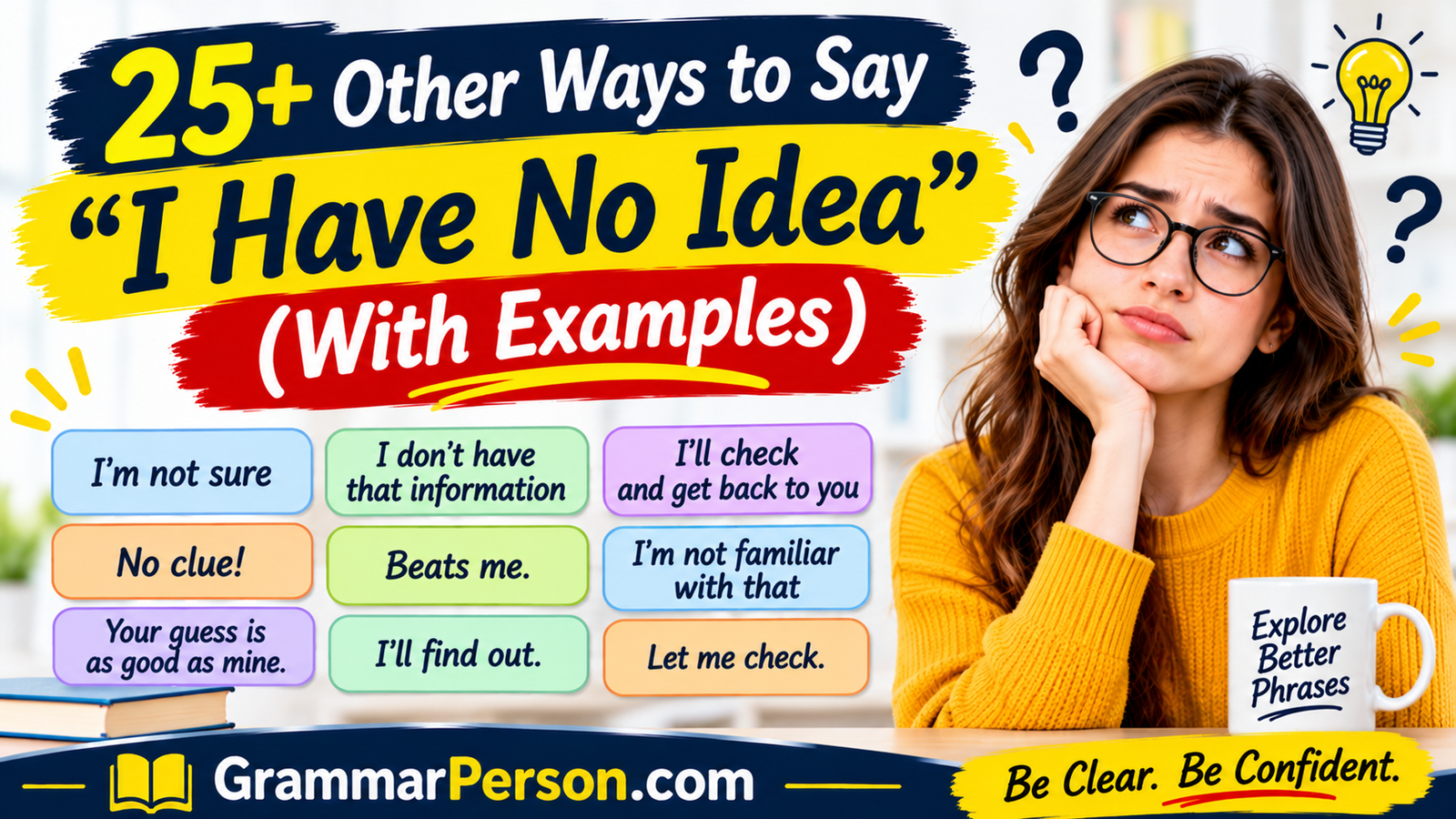
You can say “I’m not sure,” “I don’t have that information,” or “I’ll find out and get back to you.” At work, pick a polite option that offers a next step. With friends, shorter and funnier phrases like “No clue!” work well.
Why Look for Other Ways to Say “I Have No Idea”?
“I have no idea” is clear and honest. But in some settings it can sound blunt or unprepared, especially in a meeting or an email to a client.
A better phrase keeps your honesty and adds helpfulness. It also lets you match your tone to the person you are talking to. Thesaurus tools, such as this list of another word for “have no idea”, show how many single-word and short-phrase options exist.
What Does “I Have No Idea” Mean?
The phrase means you do not know the answer at all. It shows complete uncertainty. It is stronger than “I’m not sure,” which suggests you know a little.
Is It Formal or Informal?
It is neutral to informal. It is fine in daily speech, but in formal emails or interviews, softer wording sounds more polished.
“I Have No Idea” vs. “I Have No Clue”
Both mean the same thing. “No clue” is more casual and sounds slightly more playful. It works with friends, not usually with executives.
Polite and Professional Alternatives
Use these at work, in meetings, and in emails. Each one admits you do not know while keeping a professional tone.
- “I’m not sure at the moment.” Calm and honest.
- “I don’t have that information yet.” Clear and factual.
- “I’ll need to look into that.” Shows you will take action.
- “I’ll check and get back to you.” Offers a next step.
- “That’s outside my area, but I can find the right person.” Helpful and respectful.
- “I can’t confirm that right now.” Safe and careful.
Example: “Thanks for asking. I don’t have that information yet, but I’ll check with the finance team and reply by Friday.”
Casual Alternatives for Everyday Talk
These suit friends, family, and relaxed teammates.
- “No clue.” Short and common.
- “Not a clue.” Slightly more expressive.
- “Beats me.” Friendly and informal.
- “Couldn’t tell you.” Easygoing.
- “Search me!” Playful and a bit old-fashioned.
- “Haven’t the faintest.” Light and a little humorous.
For even more casual and slangy choices, this collection of other ways to say “I don’t know” is a useful reference.
Funny and Sarcastic Alternatives
Humor works best with people who know you well.
- “Your guess is as good as mine.”
- “I’m as lost as you are.”
- “Ask me something I know!”
- “That’s above my pay grade.”
Keep sarcasm out of work emails and serious talks. It can sound dismissive.
Alternatives When You Are Partly Sure
Sometimes you know a little. Instead of saying “no idea,” show what you do know.
- “I’m not certain, but I think it’s Tuesday.”
- “My best guess would be next week.”
- “I believe so, but let me double-check.”
- “I’m not completely sure. Let me confirm.”
This tone builds trust because it is honest without sounding unprepared. Writers who cover many categories, such as in this guide to funny, polite, and professional ways to say “I have no idea”, also suggest matching your phrase to how much you actually know.
“I Don’t Know” Synonyms and Their Differences
| Phrase | Meaning | Best Use |
|---|---|---|
| I’m not sure | You have partial knowledge | Meetings, daily talk |
| I’m unaware | You never heard of it | Formal emails |
| I can’t confirm | You may know, but cannot verify | Business, legal topics |
| I’m not familiar with that | You lack experience with it | Interviews, new topics |
| I have no clue | Total uncertainty, casual | Friends, texting |
How to Say “I Have No Idea” in a Meeting
Meetings move fast, so keep your answer short and useful.
- State what you do not know.
- Offer a next step.
- Give a time frame.
Example: “I don’t have the latest numbers. I’ll send them after the meeting today.”
How to Say It in an Email
In writing, tone matters even more. Use complete, polite sentences.
- “Unfortunately, I don’t have that detail at this time.”
- “I’m not certain, but I’ll look into it and update you shortly.”
- “Thank you for your question. I’ll confirm and respond by Thursday.”
Texting Options
Text messages can be shorter and more relaxed.
- “No idea!”
- “Not sure, let me check.”
- “Honestly, no clue.”
- “I’ll find out and tell you.”
Is “I Have No Idea” Rude?
Not by itself. It can sound rude if you say it flatly and do not offer help. Compare these two replies:
- Blunt: “I have no idea.”
- Helpful: “I’m not sure, but I’ll find out for you.”
The second one keeps the same honesty and sounds far more respectful.
Common Mistakes to Avoid
- Guessing as if you know. It is better to say “I’ll confirm” than to give wrong information.
- Using slang with senior leaders. “No clue” can feel too casual.
- Stopping at “I don’t know.” Add a next step whenever possible.
- Over-apologizing. One short phrase is enough.
- Using sarcasm in serious situations. It can hurt trust.
How to Choose the Best Alternative
Ask yourself three questions:
- Who am I talking to? A friend, a client, or a manager?
- How much do I know? Nothing, a little, or almost everything?
- What can I offer next? A follow-up, a guess, or a referral?
Your answers will point to the right phrase quickly.
Tone Tips for the USA and Other English-Speaking Countries
In the USA, “I’m not sure, but I’ll find out” sounds direct and helpful. In the UK, “I’m afraid I don’t know” is a softer, polite choice. In Canada and Australia, friendly and relaxed phrases such as “Not too sure, mate” or “Let me check” are common in casual settings. At work, a clear and polite tone is safe everywhere.
Conclusion
You do not need to say “I have no idea” every time. Phrases like “I’m not sure at the moment,” “I’ll look into that,” and “I don’t have that information yet” keep your honesty and add professionalism. Match your wording to the person and the setting, and always offer a next step when you can.
FAQs
What is a professional way to say “I have no idea”?
Say “I don’t have that information at the moment, but I’ll find out and get back to you.”
What is the best synonym for “I have no idea”?
“I’m not sure” is the most common and flexible choice for both casual and work settings.
What does “I have no clue” mean?
It means you do not know the answer at all. It is a casual version of “I have no idea.”
How do you say “I don’t know” politely in an email?
Write “Unfortunately, I don’t have that detail right now, but I’ll confirm and reply soon.”
Is “I have no idea” unprofessional?
Not always, but it can sound blunt at work. Adding a next step makes it more professional.
What is a funny way to say “I have no idea”?
Try “Your guess is as good as mine” or “Beats me!” with friends.
Can I use these phrases in a job interview?
Yes. Use polite lines like “I’m not familiar with that, but I’m eager to learn.”

Mr Danish Ali is an English grammar enthusiast who creates clear, practical, and easy-to-understand content at GrammarPerson, helping learners improve grammar, writing, sentences, and communication skills.