Ending a conversation politely matters just as much as starting one. “Talk to you soon” is a familiar sign-off, but using it every single time — in emails, texts, and calls — can start to feel repetitive. Whether you’re wrapping up a business email or texting a friend, having a few alternatives ready helps your message feel more natural and less like a copy-paste closing line.
This guide covers what “talk to you soon” really means, when it works best, and 30 alternatives you can use depending on the tone of your conversation.
What Does Talk to You Soon Mean?
“Talk to you soon” is a casual, friendly way of ending a conversation while signaling that you plan to connect again in the near future. It doesn’t specify an exact time, which makes it flexible — it can mean later today, tomorrow, or sometime next week.
The phrase works in both spoken and written communication, and it’s commonly used to close out:
- Phone calls
- Text message threads
- Emails between coworkers or clients
- Casual conversations with friends or family
Is It Professional or Polite to Say “Talk to You Soon”?
Yes, in most cases it’s perfectly polite. “Talk to you soon” is widely accepted in semi-formal and informal settings, such as internal team emails or messages to familiar clients.
However, it can feel too casual for:
- First-time emails to new clients
- Formal business proposals
- Communication with senior executives you don’t know well
In these situations, a slightly more formal alternative — like “I look forward to speaking with you soon” — tends to land better.
Advantages and Disadvantages of Using “Talk to You Soon”
Advantages
- Simple and universally understood
- Works in both spoken and written communication
- Feels warm without being overly formal
- Keeps the door open for future conversation
Disadvantages
- Can sound repetitive if overused
- May feel too casual for formal business emails
- Doesn’t specify a timeframe, which can feel vague
- Lacks personalization in professional contexts
Why You Need Alternatives to “Talk to You Soon”
Relying on the same closing phrase in every conversation can make your communication feel generic. Alternatives help you:
- Match the tone of the relationship — formal, casual, or somewhere in between
- Avoid sounding scripted, especially in repeated email exchanges
- Add warmth or professionalism depending on the context
- Stand out in a crowded inbox where everyone uses the same sign-offs
Tips for Choosing the Right Phrase
Before picking an alternative, consider these quick factors:
- Relationship type — Is this a coworker, client, or close friend?
- Communication channel — Email, text, or phone call?
- Formality level — Business proposal or casual catch-up?
- Certainty of timing — Do you know when you’ll actually talk again?
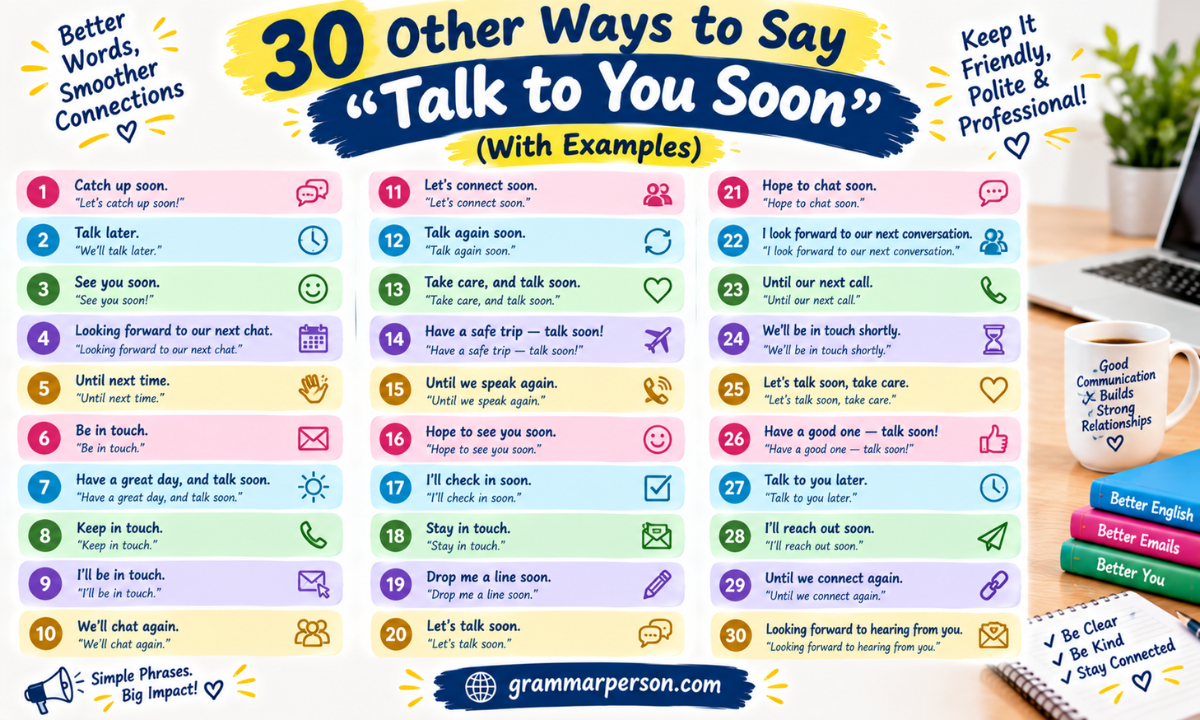
30 Other Ways to Say “Talk to You Soon”
| # | Phrase | Best For |
|---|---|---|
| 1 | Talk to you later | Casual, everyday use |
| 2 | Speak soon | Semi-formal emails |
| 3 | Catch up with you soon | Friends, coworkers |
| 4 | Chat soon | Texts, informal messages |
| 5 | I’ll be in touch | Professional follow-ups |
| 6 | I’ll reach out again soon | Business communication |
| 7 | Looking forward to talking again | Warm, personal tone |
| 8 | I’ll connect with you soon | Networking emails |
| 9 | Let’s talk again shortly | Quick follow-ups |
| 10 | I’ll follow up with you soon | Client or project emails |
| 11 | Speak to you again soon | Professional, polite |
| 12 | Looking forward to our next conversation | Formal business tone |
| 13 | Let’s touch base soon | Team or project updates |
| 14 | I’ll message you soon | Texting, informal |
| 15 | I’ll get back to you soon | Pending replies |
| 16 | We’ll talk more soon | Ongoing conversations |
| 17 | Hope to speak with you again soon | Polite, semi-formal |
| 18 | Catch you soon | Very casual |
| 19 | Let’s reconnect soon | After a long gap |
| 20 | I’ll contact you soon | Formal follow-up |
| 21 | Until our next conversation | Professional closing |
| 22 | Talk again soon | Neutral, versatile |
| 23 | I’ll talk to you shortly | Same-day follow-up |
| 24 | You’ll hear from me soon | Confident, professional |
| 25 | Looking forward to hearing from you | Awaiting a reply |
| 26 | Until next time | Warm, general use |
| 27 | More soon | Brief, informal |
| 28 | I’ll circle back soon | Workplace communication |
| 29 | I’ll follow up shortly | Business emails |
| 30 | Let’s stay in touch | Long-term relationships |
A Few Standouts Worth Highlighting
“I’ll be in touch” works well when you’re the one responsible for following up, especially in a professional setting.
“Let’s touch base soon“ is popular in workplace communication because it implies a quick, informal check-in rather than a long conversation.
“Looking forward to our next conversation” adds a warmer, more personal tone to formal emails without sounding stiff.
Casual vs. Professional: Quick Comparison
| Casual Alternatives | Professional Alternatives |
|---|---|
| Talk to you later | I’ll be in touch |
| Catch you soon | I’ll follow up shortly |
| Chat soon | Looking forward to our next conversation |
| More soon | I’ll reach out again soon |
| Let’s stay in touch | Until our next conversation |
More informations: grammarperson.com
Casual phrases work best for friends, family, or close coworkers. Professional alternatives are better suited for clients, formal emails, or first-time business contacts.
FAQs
1. Is “talk to you soon” formal or informal?
It’s generally semi-formal to informal, making it suitable for everyday conversations but less ideal for very formal business emails.
2. Can I use “talk to you soon” in a business email?
Yes, especially with coworkers or familiar clients, though more formal alternatives work better for new business contacts.
3. What is the best alternative to “talk to you soon” for professional settings?
“I look forward to our next conversation” or “I’ll follow up shortly” both sound polished and professional.
4. What’s a more heartfelt alternative to “talk to you soon”?
“Looking forward to talking again” or “Let’s stay in touch” both convey warmth and genuine interest.
5. How do I know which closing phrase to use?
Base it on your relationship with the person, the formality of the conversation, and the communication channel you’re using.
Conclusion
“Talk to you soon” is a reliable, friendly way to close a conversation, but it doesn’t have to be your only option. Depending on whether you’re emailing a client, texting a friend, or following up after a meeting, one of these 30 alternatives can help your message feel more natural and less repetitive. Keep a few in mind for different situations, and your sign-offs will always match the tone of the conversation.

Mr Danish Ali is an English grammar enthusiast who creates clear, practical, and easy-to-understand content at GrammarPerson, helping learners improve grammar, writing, sentences, and communication skills.