“How did it go” is a natural, caring question — but if you ask it the same way every time, it can start to feel like a routine check-in rather than genuine interest. Whether you’re following up on a job interview, a big presentation, or a friend’s date, the right phrasing shows you actually care about the details.
This guide covers natural, professional, and casual alternatives to “how did it go,” along with examples showing exactly when each phrase works best.
What Does “How Did It Go” Mean?
“How did it go” is a follow-up question used to ask about the outcome or experience of a specific event, task, or situation. It invites the other person to share details about how something turned out, whether it was a meeting, interview, exam, or personal milestone.
Is “How Did It Go” Professional or Polite to Use?
Yes, it’s appropriate in both casual and professional settings, especially when checking in after a meeting, presentation, or project update. However, in more formal workplace communication, phrases like “what was the outcome” or “how did the meeting go” often sound more polished and specific.
Pros and Cons of Saying “How Did It Go”
| Aspect | Details |
| Pros | Simple, warm, works in almost any context |
| Cons | Can sound repetitive with frequent use, lacks specific detail |
| Best fix | Use a more specific alternative that references the actual event or outcome |
Why You Need Alternatives to “How Did It Go”
Asking the same question over and over can make your check-ins feel automatic instead of genuinely curious. Using alternatives helps you:
- Sound more specific and engaged in the conversation
- Match the tone of the setting — casual, formal, or supportive
- Avoid repetition when following up on multiple events
- Show real interest in the outcome, not just a polite habit
Tips for Choosing the Right Phrase
- Be specific when you can. “How did the interview go?” feels more thoughtful than a generic question.
- Match the setting. Save casual phrasing like “how’d it go?” for friends, not formal emails.
- Consider the outcome focus. Use “what was the result” when you want a direct answer.
- Keep it natural. Choose wording that flows easily into everyday conversation.
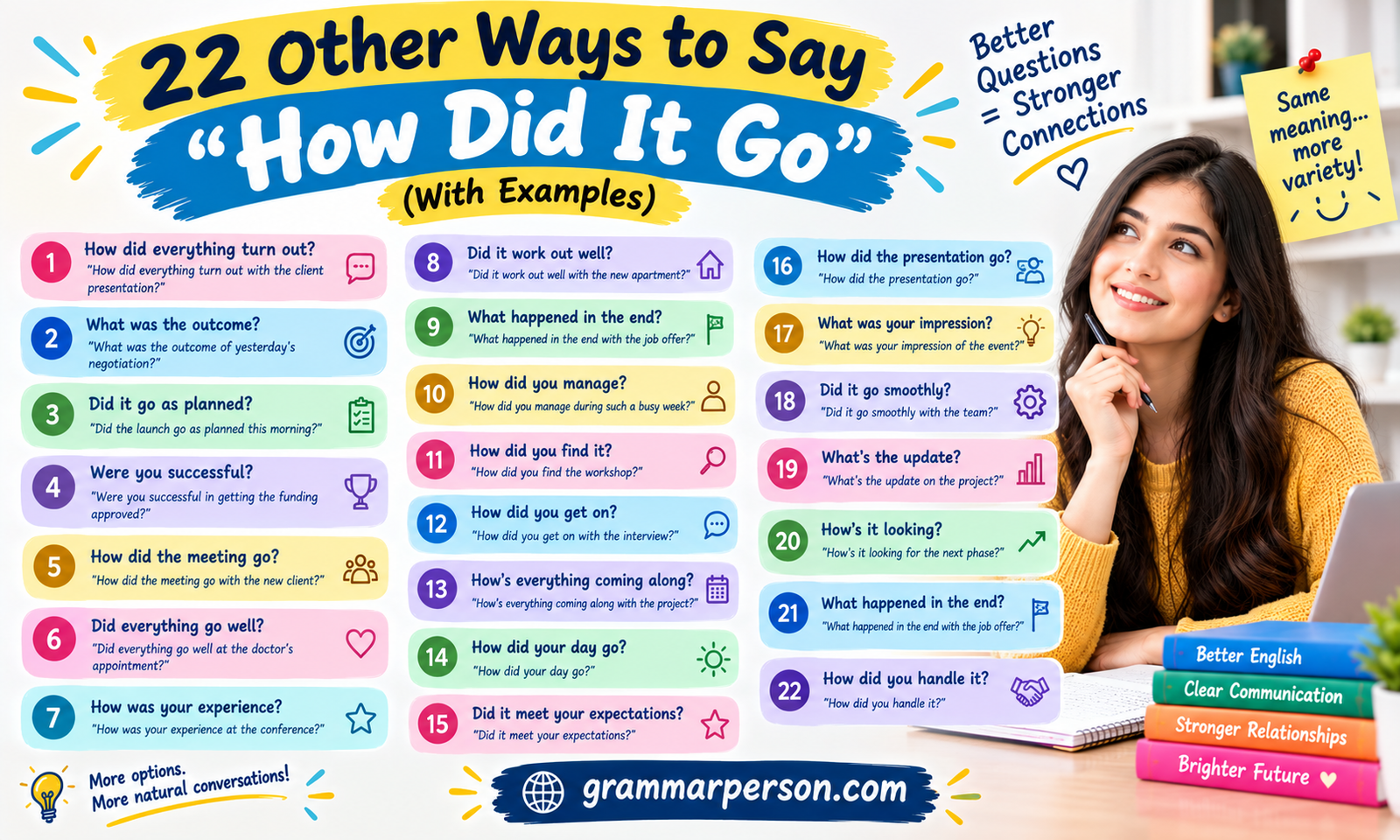
Complete List of Alternatives to “How Did It Go”
| # | Alternative Phrase | Best Used In |
| 1 | How did everything turn out | General follow-up |
| 2 | What was the outcome | Formal, results-focused |
| 3 | Did it go as planned | Checking expectations |
| 4 | How did things turn out | Casual conversation |
| 5 | Were you successful | Outcome-focused check-in |
| 6 | Did things go smoothly | Process-focused follow-up |
| 7 | What was the result | Direct, formal inquiry |
| 8 | Did it meet your expectations | Evaluating satisfaction |
| 9 | How was your experience | Personal, reflective tone |
| 10 | How did the meeting go | Workplace follow-up |
| 11 | Did everything go well | Casual, caring tone |
| 12 | How did you find it | Conversational check-in |
| 13 | How did you get on | British-English casual tone |
| 14 | Did it work out well | Friendly, informal tone |
| 15 | How’s everything coming along | Ongoing projects |
| 16 | How did your day go | Everyday casual check-in |
| 17 | Were things successful | Formal outcome check |
| 18 | How did it all come together | Comprehensive inquiry |
| 19 | Did it go smoothly | Process-oriented follow-up |
| 20 | How’s it looking | Ongoing situations |
| 21 | What happened in the end | Conclusion-focused |
| 22 | How did you manage | Supportive, empathetic tone |
1. How Did Everything Turn Out
A natural, open-ended alternative that works well in almost any follow-up conversation. Example: “How did everything turn out with the client presentation?“
2. What Was the Outcome
A direct, formal phrase best suited for professional or results-driven conversations. Example: “What was the outcome of yesterday’s negotiation?”
3. Did It Go As Planned
Useful when checking whether expectations were met. Example: “Did the launch go as planned this morning?”
4. Were You Successful
A results-focused question that works well for interviews, exams, or specific goals. Example: “Were you successful in getting the funding approved?”
5. How Did the Meeting Go
A specific, workplace-friendly alternative that avoids sounding generic. Example: “How did the meeting go with the new client?”
6. Did Everything Go Well
A warm, caring phrase suited for personal or casual check-ins. Example: “Did everything go well at the doctor’s appointment?”
7. How Was Your Experience
A reflective phrase that invites a more detailed, personal response. Example: “How was your experience at the conference this year?”
8. Did It Work Out Well
A friendly, informal way to ask about results without sounding too formal. Example: “Did it work out well with the new apartment?”
9. What Happened in the End
Focuses specifically on the final result rather than the process. Example: “What happened in the end with the job offer?”
10. How Did You Manage
A supportive, empathetic alternative often used for challenging situations. Example: “How did you manage during such a busy week?”
Formal vs. Casual Alternatives
| Formal (Workplace, Emails) | Casual (Friends, Everyday) |
| What was the outcome | How did it go |
| Were things successful | Did it work out well |
| How did the meeting go | How was your day |
| Did it meet your expectations | How’d it go |
FAQs
What are other ways to say “how did it go”?
Phrases like “how did everything turn out,” “what was the outcome,” or “did it go as planned” all work as natural alternatives.
What’s a professional way to say “how did it go”?
In workplace settings, try “what was the outcome” or “how did the meeting go” for a more specific, polished tone.
How can I make my follow-up questions sound more genuine?
Reference the specific event, like a meeting or interview, instead of using a generic phrase every time.
Can these phrases be used in text messages?
Yes, casual options like “did it work out well” or “how’d it go” are perfect for texts and everyday conversations.
Is it okay to ask “how did it go” after a job interview?
Yes, it’s a common and appropriate question — though “how did the interview go” feels slightly more specific and thoughtful.
Conclusion
“How did it go” is a caring, simple question, but variety keeps your follow-ups feeling genuine instead of routine. Whether you choose something direct like “what was the outcome” or something warm like “did everything go well,” the goal stays the same — showing real interest in the other person’s experience. Add a specific detail about the event, and your question will always feel sincere.

Mr Danish Ali is an English grammar enthusiast who creates clear, practical, and easy-to-understand content at GrammarPerson, helping learners improve grammar, writing, sentences, and communication skills.